


What Are Crypto Whales? Meaning, Market Impact, Whale Tracking Tools & How They Move Bitcoin Prices
Feb 22, 2026 01:11
If you’ve spent time in crypto, you’ve heard the term “whale.”
When price jumps or crashes suddenly, traders often say, “A whale just moved.”
So what are crypto whales, exactly? And why should traders pay attention?
Let’s keep it simple.
What Is a Crypto Whale? (Simple Definition & Quick Answer)A crypto whale is a person or organization that holds a very large amount of a cryptocurrency.
For Bitcoin, the common benchmark is around 1,000 BTC or more. That’s usually enough to influence price when moved.
In short, whales are big holders who can move markets.
How Much Crypto Makes You a Whale?There’s no official rule, but these are common standards:
- Bitcoin: Around 1,000 BTC
- By value: Often $10 million or more
- Small-cap coins: Much less can qualify due to lower liquidity
In smaller altcoins, even a few million dollars can be enough to move the market. The smaller the market cap, the easier it is to push price up or down.
Types of Crypto Whales in the Market Institutional Crypto Whales (Corporate Bitcoin Holders)Large companies and funds hold massive crypto reserves.
- MicroStrategy
- Grayscale Investments
When institutions buy or sell in size, the market reacts.
Early Bitcoin Whales (OG Holders)Some whales simply bought or mined Bitcoin early and held.
- Satoshi Nakamoto
It’s estimated that Satoshi mined around 1 million BTC in the early days.
Crypto Exchange Whales (Liquidity Providers)Major exchanges also control large reserves.
- Binance
- Coinbase
- Kraken
These wallets often move large amounts between cold storage and trading wallets.
Private & High-Net-Worth Individual WhalesSome whales are private investors who accumulated early and held.
They usually move funds strategically and in large blocks.
How Crypto Whales Influence the Market Whale Accumulation vs Distribution Phases- Accumulation: Whales buy during dips
- Distribution: Whales sell during rallies
If whales are buying heavily, supply tightens and price often rises.
If whales are selling, price pressure increases.
How Whale Transactions Trigger Price Volatility- Moving crypto to exchanges often signals possible selling
- Moving crypto off exchanges often signals accumulation
Large market orders can also clear out order books quickly, causing sharp price swings.
Liquidity Shifts & Slippage in Low-Cap CoinsIn small-cap tokens, whales have more influence.
- Bigger slippage
- Faster spikes and drops
- Easier manipulation
That’s why small coins can move 20% or more within minutes.
Whale Market Manipulation Tactics- Pump and dump cycles
- Fake buy or sell walls
- Stop-loss hunting
This happens more often in low-liquidity coins than in Bitcoin.
Bitcoin Whales vs Ethereum Whales: Key DifferencesBitcoin whales mostly hold and move BTC between wallets and exchanges.
Ethereum whales often:
- Stake ETH
- Provide liquidity
- Interact with smart contracts
ETH activity goes beyond simple holding, which changes how whale behavior shows up on-chain.
How to Track Crypto Whale Activity (Tools & On-Chain Data) Whale Tracking Tools & AlertsYou can monitor large inflows and outflows using on-chain data.
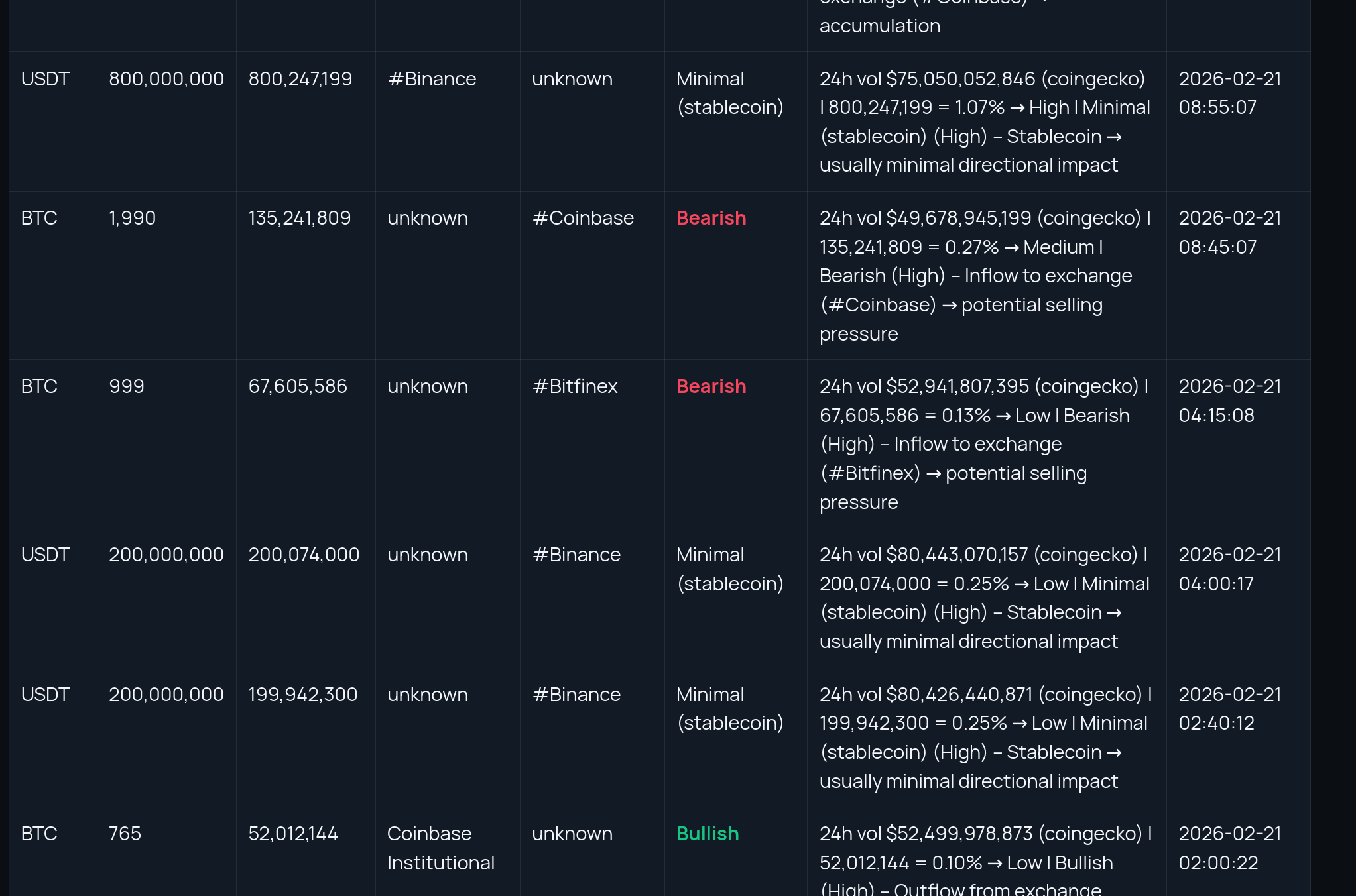
One practical way is using Blocksonar’s Whale Transfers tool:
https://www.blocksonar.net/whale-transfers/
It highlights large crypto transfers and shows:
- Exchange inflows
- Exchange outflows
- Major token movements
This helps traders spot possible selling or accumulation early.
- Large wallet balances
- Transaction history
- Sudden big transfers
All blockchain transactions are public.
Exchange Reserve MonitoringWhen exchange balances rise, it often means:
- More coins available to sell
- Potential downside pressure
When exchange balances fall:
- Whales may be accumulating
- Supply tightens
- Exchange inflows and outflows
- Wallet concentration
- Dormant wallet activation
- Large transaction spikes
Whale activity often appears in these metrics before price reacts.
Famous Crypto Whales & Their Impact on Bitcoin- Early miners holding massive reserves
- Institutions buying during bear markets
- Large sell-offs triggering short-term crashes
When whales move large amounts, markets respond.
Are Crypto Whales Good or Bad for the Market? Benefits of Whale Activity- Adds liquidity
- Brings institutional participation
- Can support long-term trends
- Sudden price drops
- Higher volatility
- Manipulation in smaller coins
Owning and trading large amounts is legal.
But activities like coordinated pump and dumps, wash trading, and fake volume creation can violate financial laws in regulated markets.
How Retail Investors Can Protect Themselves from Whale Activity- Don’t chase sudden pumps
- Avoid high leverage
- Diversify
- Monitor exchange inflows
- Track large transfers
Manage risk carefully. Position sizing matters.
Frequently Asked Questions About Crypto WhalesWhat are crypto whales?
Large holders of cryptocurrency who can influence price movements.
How do whales affect Bitcoin price?
Large buy or sell orders can shift supply and demand quickly, causing volatility.
How can I track whale transactions?
Use on-chain tools like Blocksonar’s Whale Transfers to monitor large inflows and outflows.
Do whales control crypto markets?
They influence markets, but they do not fully control them.
Are whale wallets anonymous?
Wallet addresses are public, but identities are often unknown.
Should I copy whale trades?
Not blindly. Use whale activity as one data point in your strategy.
- More institutions will participate
- Regulation will increase
- On-chain transparency will improve
Tracking whale activity will likely become a normal part of active trading.
Final Thoughts: Should You Fear or Follow Crypto Whales?Crypto whales are large players with large capital.
They don’t control everything, but they do influence markets.
Instead of fearing them, watch what they do.
When you understand whale activity, you react less emotionally and trade with more clarity.
